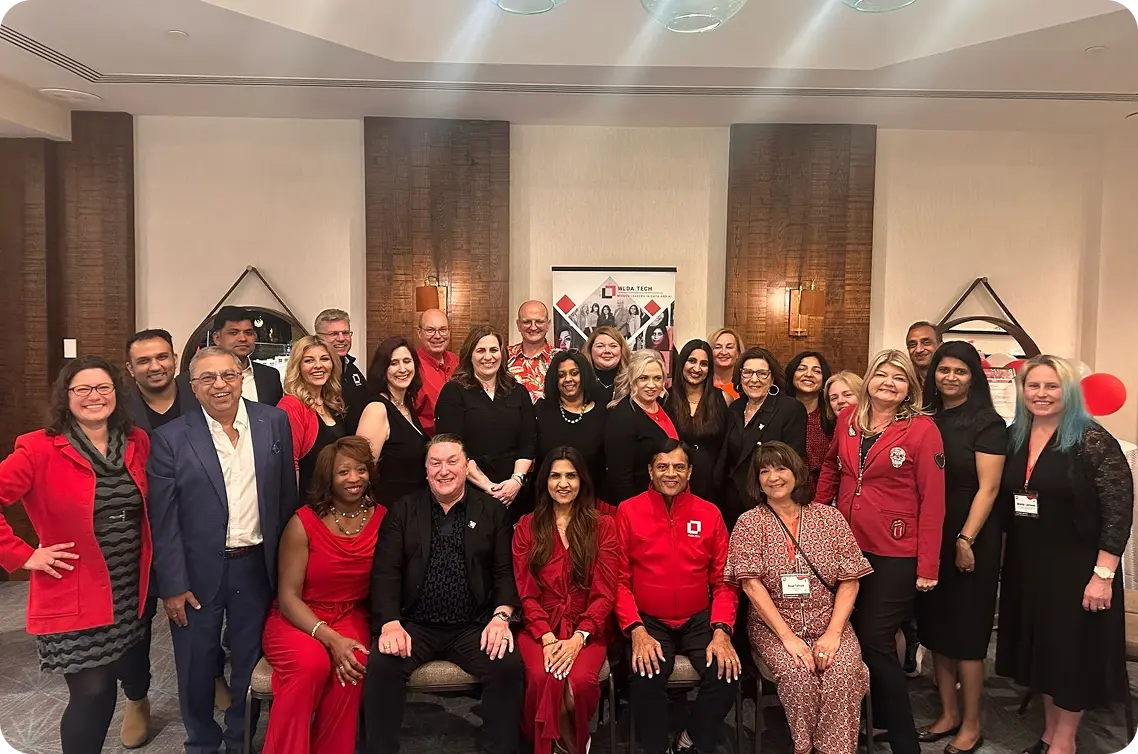

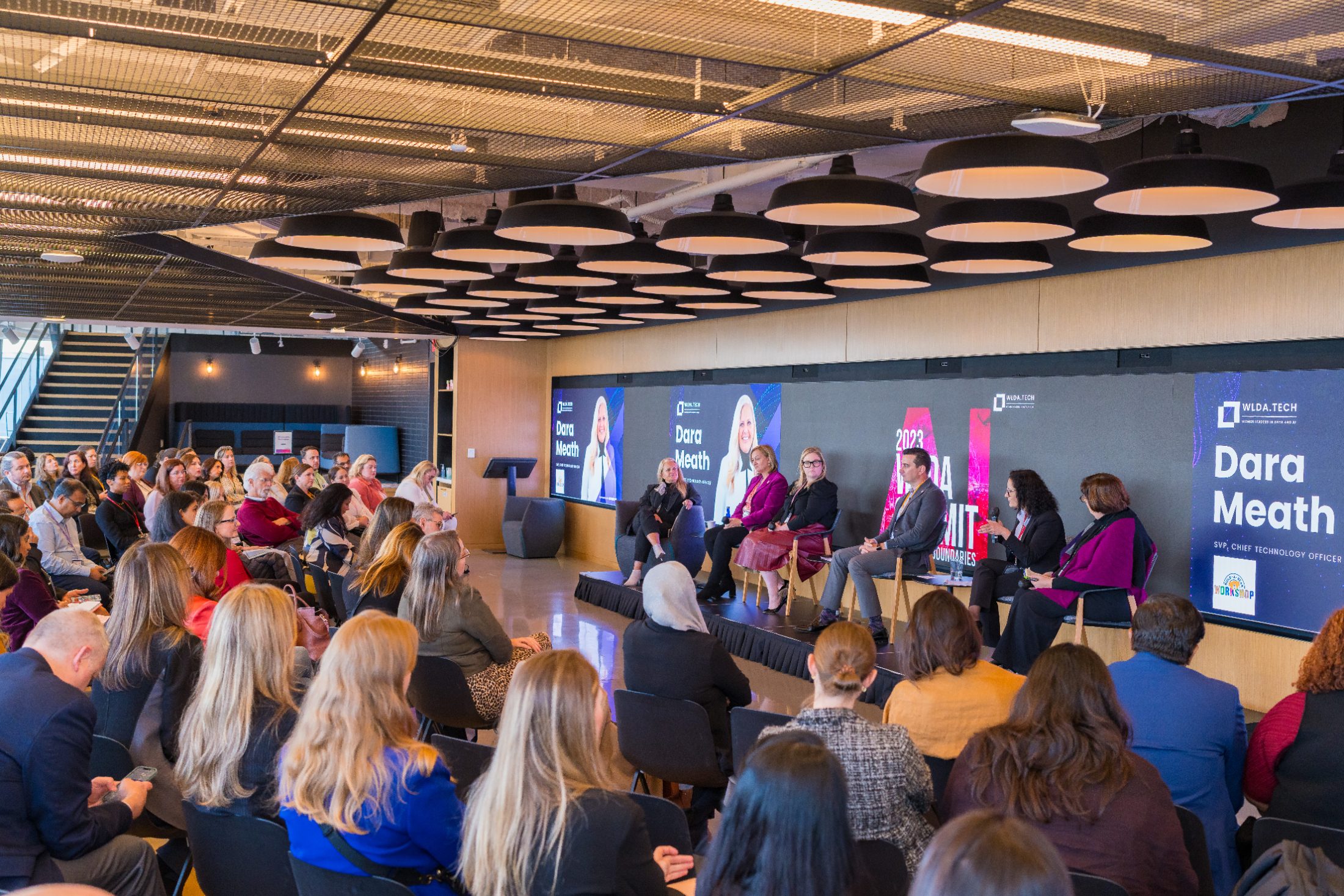
When an AI agent acts on your company’s behalf and gets it wrong, the accountability is yours. That was the clear conclusion of the WLDA x Nagarro breakfast, From AI Pilots to Agentic Enterprises, held on September 29, 2026 at Nagarro in Lower Manhattan.
The morning centered on a fireside chat between Asha Saxena, Founder & CEO of World Leaders in Data & AI, and Csaba Szabo, Managing Director of Growth at Nagarro. The leaders in the room kept returning to one question: as agents move from answering questions to taking actions, who is responsible when those actions go wrong?
What real cases already tell us
Courts and regulators have started answering the accountability question, and the answer does not favor the company that points at its software.
The group started with Moffatt v. Air Canada. In 2024, a Canadian tribunal held Air Canada liable after its website chatbot gave a customer wrong information about bereavement fares. The airline argued the chatbot was responsible for its own statements. The tribunal rejected that argument outright: the chatbot was part of Air Canada’s website, and Air Canada owned what it said.
The stakes rise sharply when agents can act, not just talk. Attendees discussed recent reports of AI agents reaching into systems they were never meant to touch, and the operational, legal and reputational fallout that followed. The lesson from both kinds of incident is the same. “The AI did it” is not a defense, and an agent with access is only as safe as the controls around it.
The control tower: making accountability work in practice
Policies on paper do not stop a misbehaving agent. The room agreed that accountability only becomes real through a “control tower”: a single place where the organization can see, constrain, stop and answer for every agent it runs. The control tower rests on four pillars, each framed as a question an executive should be able to answer today.
| Pillar | The question leaders must answer |
|---|---|
| Visibility | Which agents are running, and whose name is attached to each one? |
| Guardrails | What is each agent allowed to do, based on the level of risk and how confident it is? |
| Control | Can we stop an agent, and can we reconstruct what it did? |
| Governance | Who signs off on the outcome? |
If any of these questions draws a blank, the organization is running agents it cannot fully account for. Visibility without control is just monitoring. Control without governance leaves no one to make the call.
Who governs the control tower when every platform sells one?
The company deploying the agent owns the accountability, not the vendor selling the platform. That was the room’s answer to the sharpest question of the morning.
Nearly every AI platform now markets its own dashboard, guardrails and audit trail. These tools help, but they cannot carry the liability. Customers, regulators and courts will hold the brand on the front door responsible, just as they did with Air Canada. A vendor’s control tower sees only its own agents. Most enterprises will run agents across several platforms, so the full picture has to live with the enterprise itself.
Four moves for leaders scaling agentic AI
The discussion closed with four recommendations for executives moving from pilots to production.
- Own the control tower. Do not hand accountability to a platform provider. Vendor tools can feed your control tower, but the oversight, the inventory and the final say stay in-house.
- Draw the no-go line at irreversibility. Agents should not take actions that cannot be undone. Payments, deletions, contract commitments and customer-facing promises belong behind a human checkpoint.
- Fix the foundation before scaling. Clean data, clear permissions and defined ownership come first. Scaling agents on a weak foundation multiplies the risk along with the value.
- Run the operator model. Treat agent oversight as an ongoing, actively managed function with named owners, not a one-time launch review.
The bottom line
Agentic AI changes what software can do on a company’s behalf. It does not change who answers for it. The organizations that scale agents successfully will be the ones that can name every agent, limit what it can do, stop it on demand and point to the person who signed off.
WLDA thanks Nagarro for hosting and Csaba Szabo for a candid conversation. We look forward to continuing it with our members at upcoming WLDA gatherings.